

Bücher
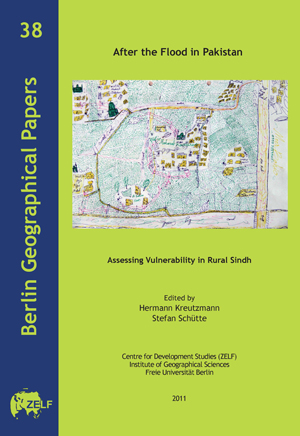
After the Flood in Pakistan: Assessing Vulnerability in Rural Sindh
After the devastating floods of August-September 2010 had destroyed the living abodes and detrimentally affected the basic resources of several million people in Pakistan, the subsequent relief operations were supposed to be terminated half a year later. By March 2011 a new phase with coordinated steps for mid-term rehabilitation and long-term development activities were envisaged. The way forward posed a major challenge. (...)
The report presented here draws the attention to one of the least-studied regions of Pakistan and to three districts in Sindh Province. The report covers eight villages in Sindh's Badin, Dadu, and Thatta districts. The selection of villages is strongly linked to the initiators and sponsors of this independent research project. The German Red Cross (GRC) and the Pakistan Red Crescent Society (PRCS) suggested to the Centre for Development Studies at Freie Universität Berlin to cooperate again - after a successful joint evaluation of development packages in Kashmir in 2009 (see volume 36 of this series) - in an assessment in Sindh Province. This time, the terms for the assessment followed a different rationale in involving the independent academic supporters. (...)
The objectives were wide-spread and far-reaching: First, to gain some insight into the socio-economic situation of rural communities in a wider setting of their districts, in their relationship to developments in Sindh province and within Pakistan. Second, to analyse the social set-up in rural Sindh in terms of vulnerability and exposure to risk. Third, to assess the impact the recent floods had on the livelihoods of households in the village settings. Fourth, to formulate recommendations for implementation of project packages. (...) The result of our work is presented in this report.
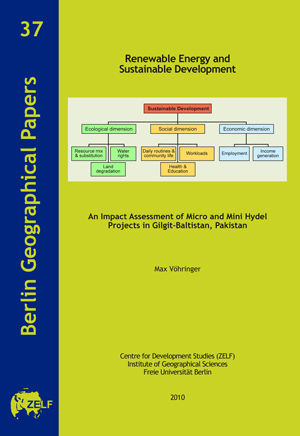
Renewable Energy and Sustainable Development: An Impact Assessment of Micro and Mini Hydel Projects in Gilgit-Baltistan, Pakistan
The Clean Development Mechanism (CDM) is a policy instrument that aims to take into account the climate development nexus. It is part of the global climate regime of the Kyoto protocol, in which most of the so-called developed countries of the world committed to reduce their GHG emissions by 5.2% below the level of 1990 until 2012. The CDM includes the developing countries in the regime by allowing developed countries to comply with their reduction commitments through the support of renewable energy projects in developing countries. The dual objective of the instrument – as laid down in article 12 of the Kyoto protocol – is to support developed countries in complying with their emission targets and to assist the developing countries in achieving Sustainable Development. There are no internationally standardized guidelines for the Sustainable Development objective but it is the host party’s responsibility to define, assess, and monitor the respective criteria.
At its initiation in 1997, the CDM was widely welcomed with high expectations for its ability to stimulate developmental benefits. By 2010, the CDM has been a great success in terms of the high quantity of projects being implemented, but has been criticised for various qualitative reasons. One of the areas of concern is that CDM projects often neglect the goal of fostering Sustainable Development on the project level and only rarely address the poorest segments of the population directly and appropriately. In order to test this hypothesis, processes on the local project level have to be analysed. What benefits are in fact created by the renewable energy projects initiated on the global climate policy level, and which of these actually impact the individual? It is the objective of this paper to investigate these questions through assessing the impact of three exemplary projects realized under the CDM.
The examples presented are small-scale hydro power plants implemented by the Aga Khan Rural Support Programme (AKRSP), a non-governmental development organisation, in Gilgit-Baltistan in the north of Pakistan. Thus far, most of the local energy demand is met by the use of biomass and fossil fuels. By implementing so-called run-of-river hydro power plants that, in contrast to larger hydro power stations, have no storage reservoir, AKRSP aims to improve the deficient access of the region’s rural population to electricity. The plants have capacities ranging between 35 and 600 kW and are also referred to micro and mini “hydels”. Comparable projects have been implemented in the high mountain region for many years. Through their promotion by the CDM they are now gaining increased prominence on the global level.
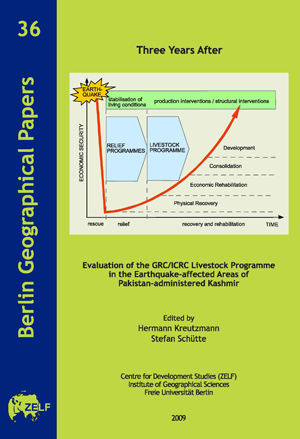
Three Years After: Evaluation of the GRC/ICRC Livestock Programme in the Earthquake-affected Areas of Pakistan-administered Kashmir
Three years after the devastating earthquake in Pakistan-administered Kashmir most relief and development programmes have gradually cut down their activities to help local communities recuperate from the disaster. In the immediate aftermath of the October 8th, 2005 earthquake a number of national and international relief organisations engaged in activities to support local communities. These activities have only rarely been evaluated to determine whether they had a mid-range or longer-lasting impact on the livelihoods of the affected people.
The report presented here is the result of an impact assessment of a livestock project implemented in the earthquake affected areas by the German Red Cross (GRC) in collaboration with the International Committee of the Red Cross (ICRC). This assessment was a joint effort of the relief and development activities executed by GRC/ ICRC, and academia from the Centre for Development Studies in the Institute of Geographic Sciences at Freie Universität Berlin. The participatory evaluation involved experienced staff from the Red Cross and representatives of village communities from the four Union Councils in Muzaffarabad District that were severely affected by the earthquake. Both acted as valuable knowledge resources, interpreters and mediators in focus group discussions and expert interviews that were conducted during the three weeks of fieldwork between March 18 and April 2, 2009. (...)
The prime objective of this joint programme was to evaluate the impact of a livestock package that intended to augment the livelihoods and provide a resource base for families affected by the earthquake, going beyond sheer disaster relief efforts and moving towards more sustainable development. The second objective was to identify achievements and short-comings of the livestock package in order to identify lessons-learned for future economic and social programmes in the context of post-disaster interventions.
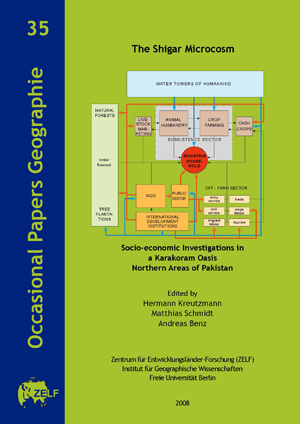
The Shigar Microcosm: Socio-economic Investigations in a Karakoram Oasis Northern Areas of Pakistan
Shigar is located in the Central Karakoram, where the residents make a living based on a combination of crop farming and animal husbandry. Because of the high mountain environment and the arid climatic conditions reflected in sparse natural vegetation cover agricultural activities face significant challenges when survival on local resources is attempted. Previous investigations and studies have described the livelihood conditions and agricultural strategies adopted in the Shigar oasis. The so-called combined mountain agriculture applied here is similar to farming strategies which can be observed in the Hindu Kush, Karakoram and Himalaya.
In Shigar, the utilisation of irrigated land plays an important role within the livelihood strategies of the local people. In our study we follow the question: “In which way did land use change during the last decade?”
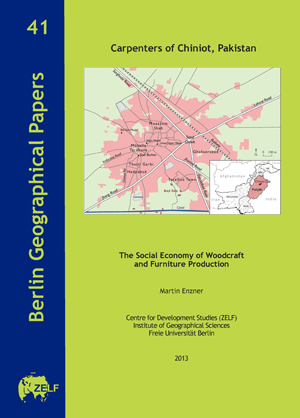
Carpenters of Chiniot, Pakistan: The Social Economy of Woodcraft and Furniture Production
The combination of the artisanal heritage, the existence of a contemporary large-scaled carpentry and woodcraft cluster and the phenomenon of carpentry being the prevalent occupation in the city, makes Chiniot an interesting case for an historical comparison of the socio-economic conditions of carpenters in society. Additionally, the topic of caste in a Muslim country like Pakistan is deserving of attention. The basic research questions underlying this paper are:
• Which economic processes influenced the carpenters’ lives during the British period?
• How was the socio-economic condition of Chinioti (respectively Punjabi) carpenters
constituted in the past, with emphasis on their caste identity during the British colonial period?
• What are the main characteristics of furniture production and marketing in Chiniot today? What implications does the production system have for the local carpenters
and their income perspectives?
• How is the socio-economic condition of Chinioti carpenters constituted today?
• Which defining features of the caste society were subject to change and what does it
mean for carpenters?
This paper is an attempt to better understand the lives of the “unknown carpenters” in the past as well as in the present. It is a sociogeographic analysis of Chinioti carpenters embedded in an analysis of the current nature of the local furniture cluster which frames their livelihoods.
Between Exploitation and Economic Opportunity? Identities of Male Nepalese Labor Migrants in the Gulf Region
Im Vorfeld der näher rückenden FIFA-Weltmeisterschaft in Katar wächst das mediale Interesse an der großen Rolle, die ausländische Arbeitskräfte für das rasante Wachstum der Golfstaaten-Metropolen spielen, und an den oft problematischen Arbeits- und Lebensbedingungen dieser Menschen. Deutlich weniger Aufmerksamkeit gilt jedoch dem ‚anderen Ende‘ dieser Migrationsprozesse, nämlich den Kontexten, aus denen diese Arbeiter kommen und in die sie später zurückkehren. Einer dieser Kontexte liegt in Nepal, wo jährlich hunderttausende Migranten das Land auf der Suche nach sogenannter niedrigqualifizierter Arbeit verlassen. Angesichts der vergleichsweise kleinen Bevölkerung und schwachen Wirtschaft Nepals haben diese Praktiken einen enormen Einfluss auf das Land – sowohl finanziell als auch hinsichtlich der sozialen und kulturellen Transformationen, die mit ihnen einhergehen. Die vorliegende Arbeit untersucht, wie sich diese meist männlichen Migranten und ihre Familien in transnationale Formen der Lebensführung einfinden und wie ihre Identitäten sich entlang dieses Prozesses verändern. Auf der Grundlage qualitativer empirischer Forschung aus dem Jahr 2012 liegt dabei ein besonderer Schwerpunkt auf der gesellschaftlichen (Neu-)Verhandlung von Beziehungen und Intimität im transnationalen Familienleben sowie der oft konfliktbeladenen und fragmentierten Aushandlung migrantischer Subjektivitäten. Auf diese Weise bietet die Arbeit nicht nur Einblicke in eine spezifische nepalesische Praxis, sondern reiht sich ein in eine zunehmend erstarkende kritische Migrationsforschung.
Aktuelle Forschungsbeiträge zu Südasien: 3. Jahrestagung des AK Südasien, 25./26. Januar 2013, Heidelberg
Extended Abstracts der 3. Jahrestagung des AK Südasien, 25./26. Januar 2013, Heidelberg.
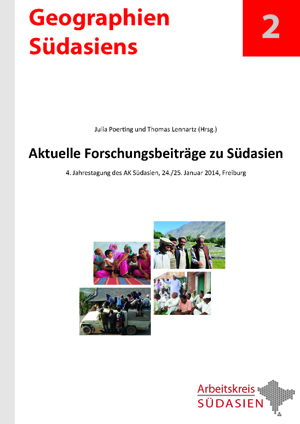
Aktuelle Forschungsbeiträge zu Südasien: 4. Jahrestagung des AK Südasien, 24./25. Januar 2014, Freiburg
Extended Abstracts der 4. Jahrestagung des AK Südasien, 24./25. Januar 2014, Freiburg.
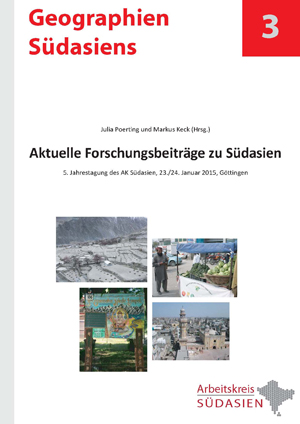
Aktuelle Forschungsbeiträge zu Südasien: 5. Jahrestagung des AK Südasien, 23./24. Januar 2015, Göttingen
Extended Abstracts der 5. Jahrestagung des AK Südasien, 23./24. Januar 2015, Göttingen.